
Way Huge Camel Toe MKII Explained: Two Overdrive Pedals In One, With A Twist


While I was trying to decide on the gain staging for a new small pedal board build, I stumbled upon a great deal on a Way Huge Camel Toe Mk II pedal.
I wanted to go for a dual overdrive/distortion pedal of some sort.
The only problem?
I wanted one side to be something familiar and the other side of the pedal to be something less familiar.
Something different to all the Klons, Tube Screamers, Blues Breakers, ODR1s, and the various pedals trying to sound like a Dumble (well, one of them).
You know the story, I’m sure.
At first glance, the Camel Toe seemed like it could fit that bill.
So, I thought it was time to dig a little deeper and do some research. At least compared to my usual “buy first and ask questions later” approach.
But I thought others would find my research helpful. So here we are.
In this post, you’ll find a breakdown of the Way Huge Camel Toe Mk II pedal. It’s essentially two other Way Huge pedals mashed together with some other tweaks, so I’ll break down what they’re all about too.
Let’s get into it.
Note: I’m not going to call this a “Way Huge Camel Toe Mk II Review” because it sort of isn’t. However, this post will still provide some useful context/insights for anyone considering purchasing the pedal. Also, be aware that this pedal has been discontinued.
A quick overview of the Camel Toe Triple Overdrive (MK II)
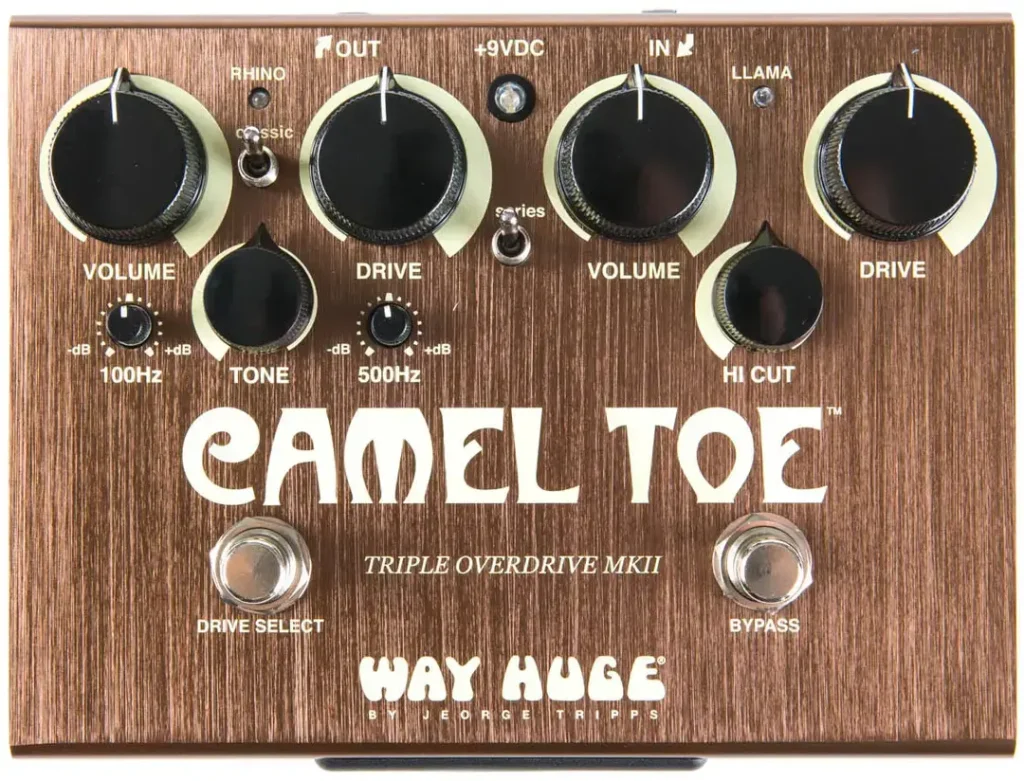
Before we get into the specifics of each side of this pedal, I’ll give you a quick overview.
The Camel Toe Mk II is a dual overdrive and distortion pedal that combines two popular Way Huge Circuits – the Green Rhino and the Red Llama. All in a single enclosure.
There have been some different iterations of each of these pedal circuits. From what I can tell, the Rhino section (left side) is the same as the Green Rhino Mk IV, giving you 100Hz & 500Hz EQ controls.
The Llama section (right side) does differ slightly from the original Red Llama in that you get the addition of a hi-cut which allows you to roll off more treble than the standalone pedal.
The original Red Llama had several iterations but even the Mk III didn’t have this hi-cut control.
We’ll dig into the rest of the controls for each side in a moment.
First, what about switching?
You’ve got two footswitches. On the left, you can switch between each side of the pedal. On the right, a bypass switch to turn the pedal off/on.
There’s also a toggle switch which activates series mode. This mode slams the Rhino into the Llama side.
When the “series” switch is engaged, the drive footswitch toggles the Llama on/off while leaving the Rhino engaged. Given the nature of the Rhino circuit (which we’ll get into in a moment), this definitely seems like the best way to do things.
I’m guessing this is why it’s referred to as a triple overdrive. But I feel that naming convention is a little odd because I’d expect 3 independent gain stages from a pedal referred to as a “triple overdrive”. Rather than 2.
Personally, I’d just call it a dual overdrive and be done with it but the original Camel Toe Mk I was a limited run pedal from the 90s and the Mk II was released in 2017. And dual overdrives were pretty uncommon in the 90s. Now? There’s loads kicking around.
Anyway, what about power? The pedal runs on 9v and draws 110mA. What I particularly like is that you can power it on a 9v battery. Very few dual overdrive pedals I’ve tried run on a battery.
Overall, I like having two gain stages in a single pedal. It’s one less pedal to power and provides a lot of flexibility.
But what I like the most is that the Red Llama side of the pedal is a type of circuit that I’m not familiar with.
Next, let’s get into what each side of this pedal is all about.
Red Llama Side (in the Camel Toe Mk II)
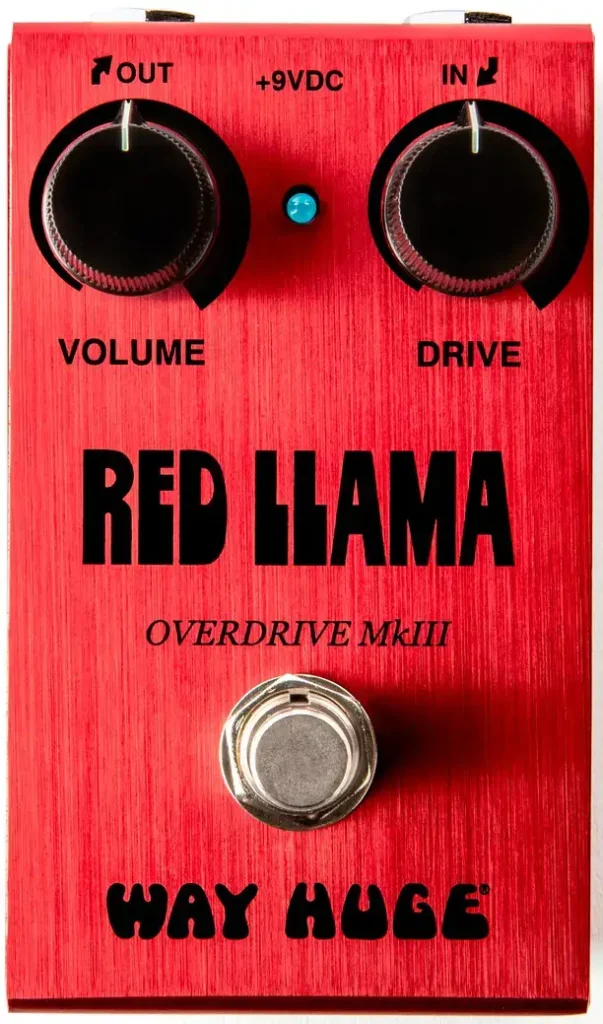
I usually like to go left to right but let’s kick this off with the Llama side on the right instead. Because this is the side I’m most interested in.
The Red Llama is based on Craig Anderton’s “Tube Sound Fuzz” circuit.
The controls are pretty straightforward. Drive, volume, and hi-cut.
You won’t find the hi-cut on the standalone Red Llama pedals so it’s nice that they included some sort of tone shaping in the Camel Toe pedal.
From the research I’ve done, this side of the pedal provides amp-like overdrive at lower gain levels.
Cranking up the gain takes the pedal into distortion/fuzz territory and provides rich harmonics. You can then shape the top-end to taste with the hi-cut which will be most useful in series mode.
Now, let’s talk about the circuit. I’m not going to pretend to understand all of this because I’m not an electrical engineer.
At the heart of this circuit is a CMOS hex-inverter (CD4049). You get multiple inverter stages from a single IC that are used to generate gain.
You can find the full schematic here.
Green Rhino Side (in the Camel Toe Mk II)
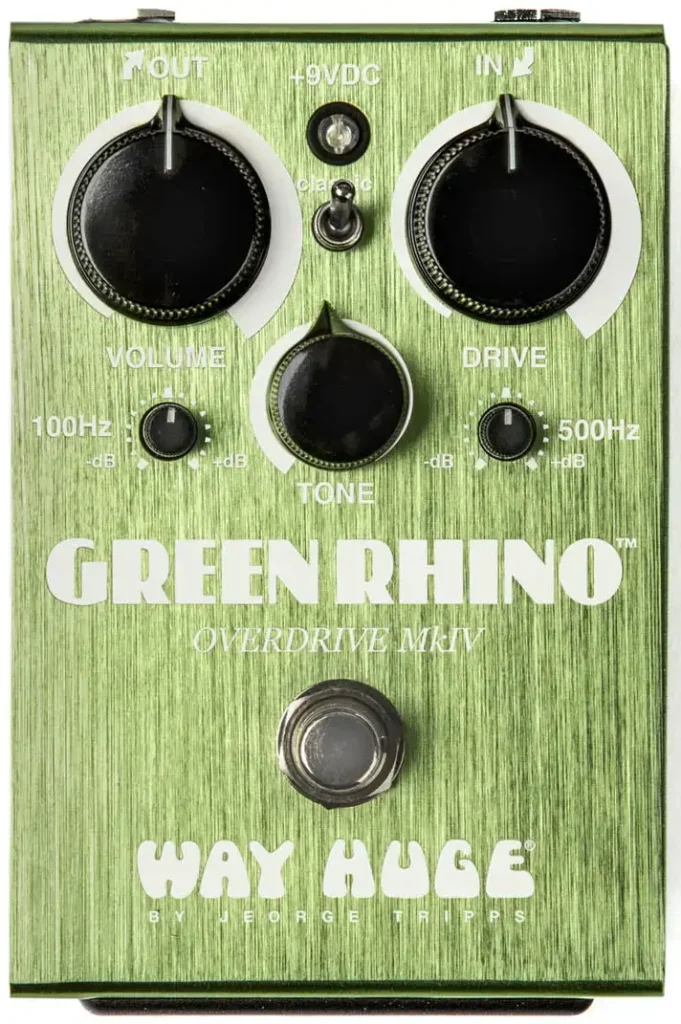
The Green Rhino is based on that classic green overdrive pedal. The Tube Screamer.
The thing I like about the Rhino, though? More tonal flexibility.
As you’d expect, you’ve got the typical volume, drive, and tone controls. But as an added extra you get two small rotary controls. Allowing you to cut/boost 100Hz and cut/boost 500Hz.
And if you prefer the OG TS style circuit? You can flick the “classic” toggle switch to drop these extra controls out of the circuit.
As you’d expect from a Tube Screamer, you can expect reasonably transparent sounding “amp-like” overdrive with a bit of a mid hump to it. And all those other buzz words, I’m sure you’ve heard a million times.
Works great on strats if you want to drive your amp a bit harder, and it works great for metal guitars if you need to tighten up your tone a bit.
Now, whether the hype is deserved or not is more opinion than anything but it does a thing. And it does it VERY well. Well, a few things really. And I’m glad that we live in a world where there are so many variations of this circuit.
Wouldn’t it be boring if there was only one variant of the Tube Screamer? Not even a mod? That’s a world I don’t want to be a part of. Even if I’d be better off financially.
Final thoughts
Overall, the Camel Toe Mk II fits my brief; a dual overdrive with a familiar circuit and a less familiar one.
I’ve already got a bunch of dual overdrives that fit into the usual categories of Dumble style pedals, Tube Screamers and Klon clones but that Red Llama circuit – that could be the slightly different flavor of gain that I’ve been looking for.
But will I buy one for this pedal board build? I’m leaning towards yes but it sort of irks me that I already own a Green Rhino pedal. I could get a Red Llama and pair it with any other TS style pedal but I do like the idea of having the two in a single enclosure.
So, I guess, we’ll have to wait and see.
Sources:
