
9 Best Sites To Sell Stock Music Online In 2026


Selling stock music can be a smart way to make money as a musician.
The top sellers can pull in thousands of dollars every month in upfront royalties, plus extra from performance royalties.
In this post, I’m breaking down the best sites to sell stock music, so you can get started quickly, reach the right buyers, and start earning from your tracks.
#1 – Your own website
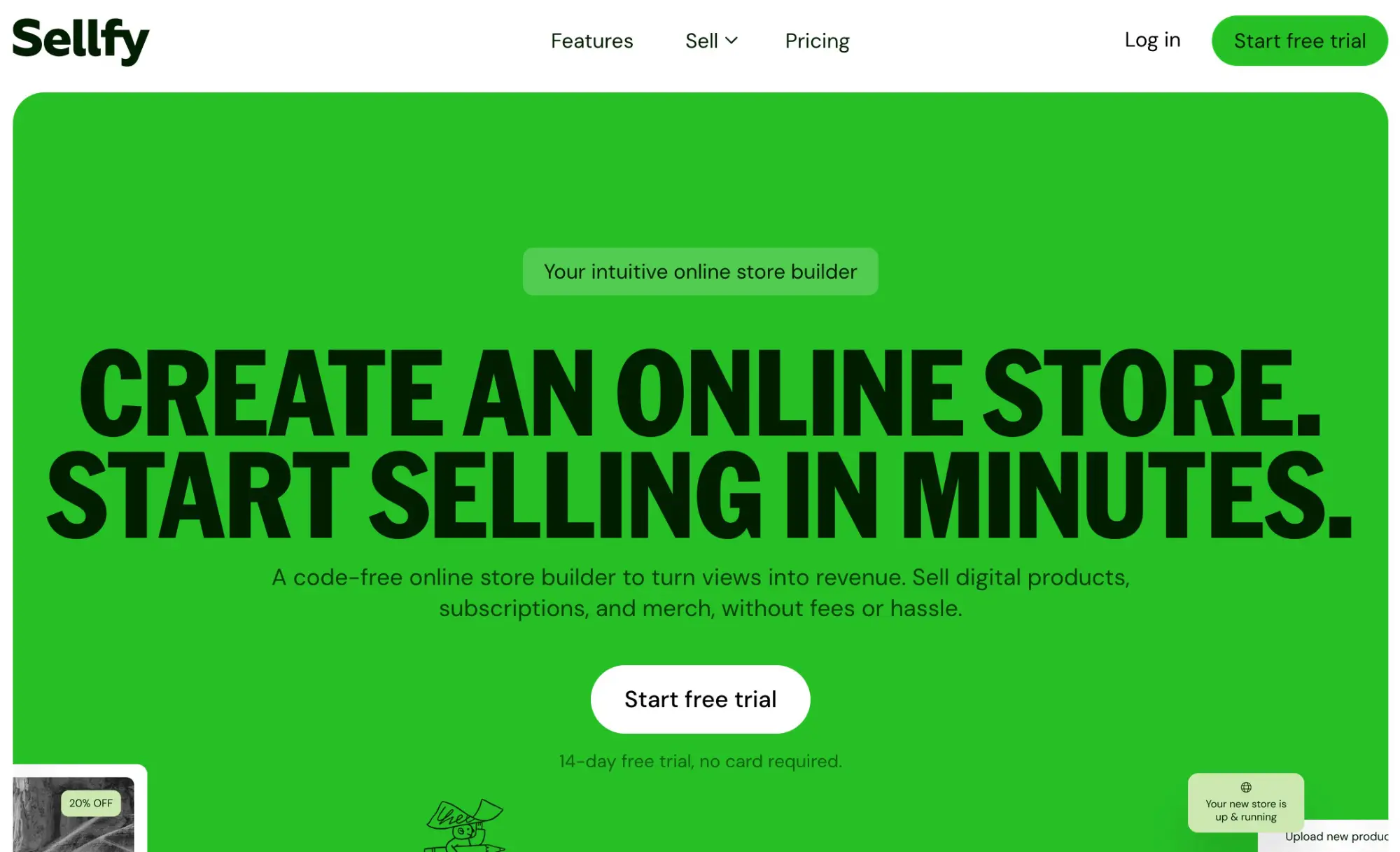
The best way to sell stock music? Your own website. And the good news? You can have one up and running with Sellfy in under an hour.
Here’s why selling through your own site is the smartest move. You get to keep 100% of the money from every stock music sale.
A lot of musicians go through third-party stock libraries or marketplaces instead of their own sites. The problem? Those middlemen take a huge cut. Often 50% to 65% or more. Crazy right? That leaves you with just a fraction of what you could earn.
Sell through your own store and you keep it all. Every sale. Every time.
There are other perks too. No gatekeepers, no hoops to jump through, and total control over your pricing and storefront. You decide what to charge and how your music is presented.
Building a stock music website isn’t complicated. Sellfy gives you everything you need out of the box. Sign up, upload your tracks as digital products, set your prices, and customize your store however you like.
From there, you can drive traffic to your site and use Sellfy’s built-in marketing tools to turn visitors into paying customers. Everything you need to sell music online, grow your brand, and keep your profits is ready to go.
#2 – Shutterstock
Shutterstock is probably the most popular stock library in the world. It’s best known as a place to source royalty-free stock images, but you can also use it to sell stock music, sound effects, and more.

What’s great about Shutterstock is how popular it is. As the leading stock media provider, it gets more traffic and sales than any other library. Over the last decade, Shutterstock has sold over a million licenses and paid out over a billion dollars to its contributors.
To become a music contributor, you’ll need to submit up to 5 of your original tracks to Shutterstock for consideration. They must be uploaded in MP3 format and you must own 100% of the copyright.
If Shutterstock likes your stock music and wants to add it to their catalog, they’ll buy out the rights for a substantial upfront per-track fee.
The good news is this means you’re guaranteed to get paid even if no Shutterstock customers ever end up licensing stock music that you provided. But the bad news is once you’ve sold your stock music to Shutterstock, you’ll no longer own the rights, so you won’t earn any additional payouts from sales on the Shutterstock marketplace.
However, PRO-affiliated composers can still receive 100% of the writer’s share of performance royalties if/when their music is featured in a public broadcast.
#3 – AudioJungle
AudioJungle is the audio branch of Envato Market. It’s run by the same company as Envato Elements but doesn’t operate on a subscription-based model.

On AudioJungle, users can’t pay to subscribe and download any stock music track they want for free like they can on Elements—they have to purchase stock music tracks individually. And Authors are paid a cut of the revenue of each individual sale.
Prices vary from track to track but mostly seem to fall somewhere around the $20-$35 range. However, some tracks sell for as little as $5 (especially when there are promotional discounts).
You can sell royalty-free music in pretty much any niche on AudioJungle, but the stuff that sells the best tends to be more ‘corporate’ tunes. Anything that sounds inspirational/motivational seems to be a recipe for success.
Aside from stock music, you can also sell other audio files on AudioJungle, including music kits, sound effects, music logos & indents, and more.
#4 – Pond5
Pond5 is one of the best marketplaces for beginners to upload their stock music to. It has reasonable quality standards and isn’t trying to curate a specific sound, so it’s fairly easy to get accepted.

Pond5 is a solid option if you want flexibility. Their arrangements are non-exclusive and non-perpetual, so you are never locked in. You can remove your tracks or upload them to other sites anytime.
It is also a very active marketplace with plenty of traffic, which makes it easier to get your music in front of buyers.
You can earn money in a couple of ways. Your royalty share from stock music sales is 35 percent, which is not huge. But Pond5 also lets you earn extra through referrals.
When someone you refer makes a purchase, you get 30 percent of their first buy and 15 percent on all subsequent purchases for a year. Combine that with royalties and you could earn up to 65 percent of the sale price.
Pond5 also stands out for branding. It is one of the few stock marketplaces that lets you create a custom storefront to showcase your work. You can change your cover photo, profile picture, write your bio, set up curated collections, and display your social handles, all from one page.
On top of that, Pond5 Publishing lets you collect performance royalties on your behalf, so your tracks can earn even more over time.
#5 – Roqstar
Roqstar is a fantastic audio marketplace that offers very generous royalty rates. It pays creators a much higher percentage of each sale than many of its competitors.

Signing up for a free Roqstar account lets you upload up to 10 products to their marketplace. This is not just for stock music. You can sell sample packs, presets, beats, and other types of audio products right away.
Free users keep 70 percent of the money from each sale, and payouts happen instantly as soon as someone makes a purchase.
If you upgrade to one of Roqstar’s paid monthly plans, you keep 100 percent of your sales with zero fees. You also unlock a bunch of premium features, including tools to help you build a fan base.
Another great feature is memberships. You could upload multiple stock music tracks to your store and offer access to them all for a recurring monthly subscription. This is a smart way to generate consistent income while giving your fans more value.
#6 – Epidemic Sound
Epidemic Sound is a trendy royalty-free music platform that’s especially popular amongst YouTubers, streamers, and social media influencers.

Music from Epidemic Sound gets over 1.5 billion views every day on YouTube and is featured in hundreds of millions of streams every month. That gives you a sense of just how popular the platform is, and why it can be a great place to sell your stock music.
They offer a flexible non-exclusive licensing agreement and pay upfront for tracks they are interested in. All royalties are split 50/50 with the artist.
On top of royalties and upfront payments, you can also earn a share of the $2 million Soundtrack bonus.
This is based on how often your tracks get played in Epidemic Sound’s player, giving you an extra opportunity to increase your income.
#7 – PremiumBeat
PremiumBeat is another popular stock music site owned by Shutterstock. It’s a premium, curated marketplace where you can buy and sell royalty-free music and sound effects.

One thing we like about PremiumBeat is how straightforward the application process is.
Just head to their new artist page and fill out a short form to submit your music for consideration. It takes less than two minutes.
If accepted, you can start selling your tracks on PremiumBeat on an exclusive basis. But unfortunately, they don’t accept any music on a non-exclusive basis, so if you sell your tracks on PremiumBeat, you can’t also sell those same tracks elsewhere. Keep that in mind.
#8 – Jamendo
Jamendo is another marketplace where users can sell royalty-free stock music licenses

Over 9,000 artists are featured on Jamendo, which sounds like a lot, but it’s actually fewer than many other platforms, which makes it less competitive and easier to make sales.
They offer a reasonable revenue split, with up to 65% going to the artists. And there’s a good variety of music on the site. It’s not all corporate jingles and vamping temp music: There are some really creative, original songs too.
Jamendo also offers a content ID service. It’ll find and monetize videos on YouTube that are using your stock music without permission so that you receive up to 80% of the ad revenue.
#9 – Envato Elements
Envato Elements is a subscription-based marketplace where users can find royalty-free stock music, video, sound effects, photos, templates, and more.

Envato Elements is one of the biggest names in stock content, with over 2 million customers every year and more than a billion dollars paid out to its creator community.
The platform runs on a revenue-share model. Fifty percent of Envato’s net revenue from subscription sales goes to the authors, the people who create and upload content like stock music, and the other fifty percent goes to the platform.
This means you do not sell your tracks for a fixed fee like on other marketplaces. Once your music is uploaded, it is available to all Envato Elements subscribers. You earn a portion of the subscription revenue based on how often your tracks are downloaded. The more popular your music is, the more you make.
Note: According to its author page, Elements isn’t currently accepting author applications from audio creators at the time of writing. That said, I’d still recommend keeping an eye on it as I imagine they might open up applications in the future if they decide they could use fresh new content.
Frequently asked questions
Before we wrap up, here are the answers to some frequently asked questions about making money selling music.
What is stock music?
Stock music is pre-recorded music that’s sold as part of a large music library. Unlike traditional music, it’s available off-the-shelf. It isn’t commissioned or composed specifically for one film or TV show.
What are the benefits of selling stock music?
Selling stock music can be a fantastic way to make money as a musician. Here are some of the biggest benefits:
- Easy sales. With stock music, you don’t need to do as much promotion or put in a lot of work building a fanbase in order to make sales, like you would if you were selling traditional music.
- Low barrier to entry. You don’t need to have a ton of time or money to invest in order to make a living as a stock music producer. All you have to do is compose and upload your songs to your chosen stock library, and cash your checks when they come in.
- Retain all ownership of your songs. With stock music, you typically grant clients non-exclusive licenses to use your music. As such, you can sell the same song over and over again to as many clients as you want and retain all ownership of the original copyright.
- Long-term passive income. A lot of successful stock music sellers report earning thousands of dollars in performance royalties every month from their music placements, providing them with a lucrative passive income stream for many years.
Note: It is possible to sell stock music under exclusive licenses too if you want to go down that route, but this is less common. When you sell stock music under an exclusive license, you can typically charge much more but you won’t be able to resell it again to anyone else.
What does good stock music sound like?
Most people who buy stock music know exactly what they need. A TV producer might be looking for a track to fit a specific scene, and they want it to match the mood perfectly.
That means good stock music should have a clear mood. It should convey a single emotion that fits an idealized scene.
It should also have a clear structure with a beginning, middle, and end, and evolve regularly. About every four bars works well. Keep melodies simple and avoid overcomplicating things because stock music often plays under dialogue.
In most cases, shorter tracks work best. Aim for 15 to 60 seconds and make them loopable. That said, you can also sell full songs or instrumentals as stock music if that fits your style.
How much do stock music sites pay?
When you sell stock music, you’ll typically be paid upfront royalties/sync fees.
The amount you’ll be paid upfront will depend on the price you charge for your music, and the cut the site that you sell through takes.
Some people sell stock music licenses for as little as a few bucks per track to $50+.
From that, the stock music library might take a cut of 50-70%. So on average, you can probably expect to earn around $10-$15 per sale.
However, on top of your upfront royalties, you may also be able to earn back-end royalties (sometimes called performance royalties) when your music is performed publicly. In the US, you’ll need to register your music with Performing Rights Organizations (PROs) like ASCAP and BMI to earn performance royalties.
Stock music vs royalty-free music: What’s the difference?
Royalty-free music is music that clients can license for an initial upfront fee, and then use freely without having to pay any additional ongoing royalties.
Stock music, on the other hand, is just music that’s available off-the-shelf for licensing. It isn’t necessarily always royalty-free (though it often is).
What stock music genre should I focus on?
Some of the most popular stock music genres include cinematic, corporate, ambient, upbeat, and EDM. But there are buyers out there for pretty much every genre you can think of. And the more niche the genre, the less competition.
So my advice is to not get too hung up on the genre if you’re just starting out. Just make whatever music you enjoy making the most and if you realize after the fact that there’s not much demand for it, pivot to something else.
Final thoughts
That wraps up our list of the best places to sell stock music.
If you want to maximize your earnings and keep full control, your best move is to build your own ecommerce site with Sellfy. You sell directly to your customers, there are no middlemen, and you keep every dollar you make.
If you prefer selling through an existing stock music marketplace, Shutterstock is a solid place to start. It has a large audience, lots of traffic, and makes it easy to get your music in front of buyers.
Pick your path, get your tracks out there, and start turning your music into revenue today.
Finally, while you’re here, you might want to check out some of our other posts:
